
Drone Healthcare Logistics in Africa Slashes Delivery Times and Reduces Spoilage, 2025 White Paper Shows
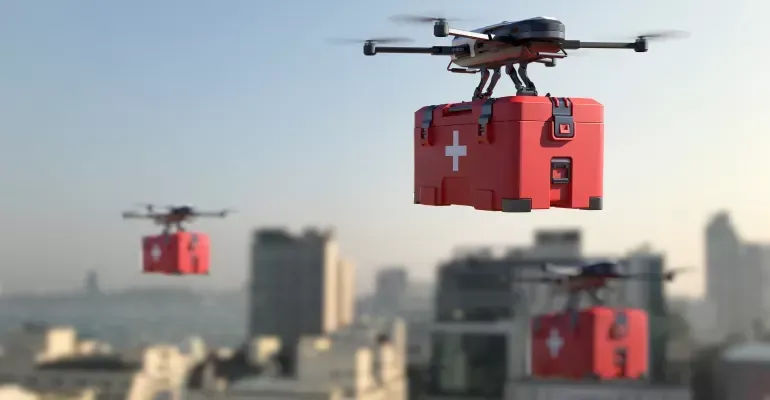
A comprehensive 2025 white paper on healthcare supply chains in Africa reveals that drone-based logistics programs have delivered transformative improvements in medical delivery speed and waste reduction—dramatically changing how life-saving supplies reach patients in underserved regions. The analysis, drawing on national drone delivery benchmarks and real-world data across several African countries, highlights gains that could redefine healthcare logistics across low- and middle-income nations.
Revolutionising Medical Supply Chains
According to the white paper Transforming Healthcare Supply Chains with Drone Technology in Africa, drone logistics have slashed delivery times for critical medical supplies by as much as 85%, reducing journeys that once took hours down to roughly 15–60 minutes in many settings. This rapid delivery capability is crucial for emergency treatments such as maternal hemorrhage care, trauma response, and outbreak control, where every minute can mean the difference between life and death.
In addition to faster deliveries, drone logistics have significantly reduced the spoilage of temperature-sensitive medical products. The report indicates that spoilage rates for vaccines, blood products, and other biologics have dropped by roughly 70%, owing to improved cold-chain compliance and streamlined, on-demand transport.
Success Stories from Across the Continent
The white paper draws on case studies from a range of African countries where national or regional drone logistics operations have been implemented.
Rwanda: One of the earliest adopters, Rwanda’s partnership with drone provider Zipline has become a global benchmark. Since launching its national program in 2016, drones have delivered blood products, vaccines, and other supplies to thousands of clinics and hospitals, drastically reducing delivery times from multiple hours to under 60 minutes—sometimes as low as 15 minutes. This speed has helped cut blood expirations by more than two-thirds and has underpinned improvements in emergency care outcomes.
Ghana: Ghana’s drone delivery network, also primarily run in partnership with Zipline, has shown impressive results in reducing vaccine and medical stock spoilage, with estimated reductions of up to 80% for some product categories. The country has scaled drone services to reach hundreds of remote clinics, greatly enhancing access to supplies for rural health facilities that previously struggled with long transport times and unreliable roads.
Complementing this, independent studies in Ghana show that drone delivery has had broader healthcare benefits: one assessment found a 56.4% reduction in maternal deaths at facilities served by drone logistics compared with those not served—an outcome linked to consistent availability of essential medicines and emergency supplies.
Kenya, Nigeria, Malawi and Beyond: Other countries are also leveraging drone logistics, with programs showing similar improvements in delivery times and cold-chain integrity. In Kenya, drone initiatives are helping cut delivery durations and reduce stock-outs at rural clinics, while in Nigeria and Malawi drone deliveries have been used to improve access to vaccines, HIV test kits, and other crucial supplies—even in areas with challenging terrain or disrupted road networks.
Why the Gains Matter
Traditional ground transport for medical logistics in Africa can be slow, costly, and vulnerable to infrastructure challenges such as poor roads, seasonal flooding, and long distances. These constraints have historically contributed to stock-outs, wasted perishable supplies, and delays in emergency responses. By contrast, drones fly over such obstacles, offering rapid, autonomous delivery directly to health facilities or designated drop points.
This shift has multiple benefits:
1. Patient Outcomes: Faster delivery of blood, vaccines, and medicines increases health system responsiveness and can directly improve survival rates in emergencies.
2. Reduced Waste: Improved cold-chain monitoring and on-demand delivery help keep temperature-sensitive products viable, preventing costly spoilage.
3. Expanded Coverage: Drones extend reach into rural and remote communities that were once difficult or slow to serve by road.
4. Cost Efficiencies: Savings from reduced waste and fewer stock-outs can free up health system resources for direct patient care and emergency readiness.
Challenges and the Road Ahead
Despite these gains, the white paper also highlights ongoing hurdles to scale and sustainability. Regulatory barriers related to airspace rules, high upfront costs for establishing drone hubs and technology infrastructure, and the limited payload capacity of current drone models are typical constraints that require coordinated policy support and investment.
Furthermore, drones address logistics but do not fully substitute for broader healthcare system needs such as staffing, equipment availability, or clinic infrastructure. Integrative approaches that combine drone logistics with wider health system strengthening are therefore critical.
The Future of Medical Logistics in Africa
Looking forward, the white paper suggests expanding drone networks continent-wide, incorporating advanced analytics for demand forecasting, and developing larger drones capable of carrying heavier payloads. Partnerships among governments, technology providers, and global health stakeholders could help reduce costs and regulatory friction, enabling even broader adoption.
Source: ACCESS Health (June 2025, PDF) —Health logistics: white paper shows big cuts in delivery times and spoilage . accessh.org