
Mining Industry Sees Rising Demand for Drone Technology Across Africa
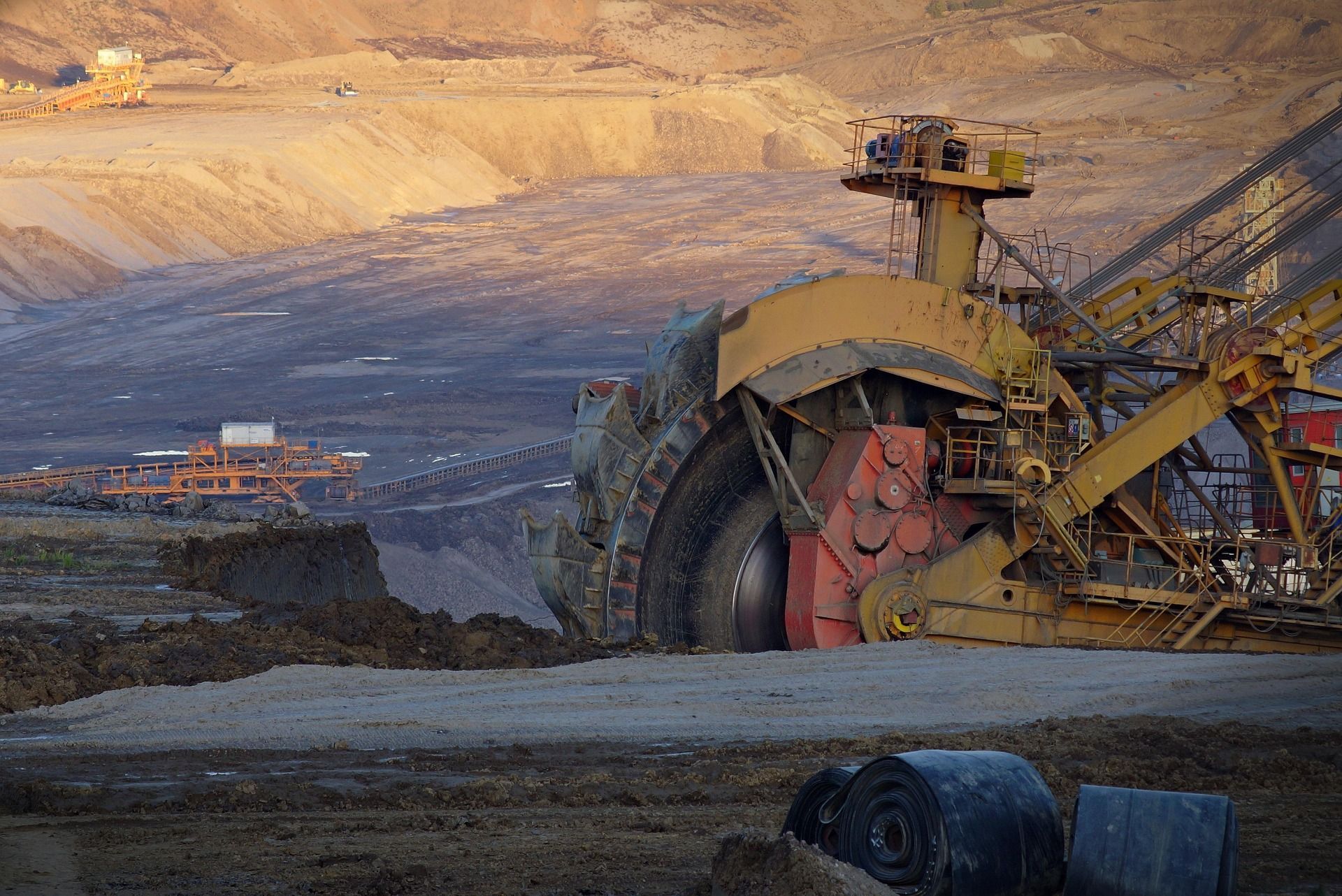
The African mining industry is witnessing a significant surge in the adoption of drone technology, as operators increasingly deploy unmanned aerial vehicles (UAVs) to enhance efficiency, improve safety, and optimize data collection. From stockpile surveys and terrain modelling to underground inspections, drones are becoming an indispensable tool across mine sites on the continent.
According to a recent report by Mining Weekly titled “Demand increases for drones in mines” (14 February 2025), mining companies in the Democratic Republic of the Congo (DRC) are already operating fleets of up to five drones per mine site on a daily basis. These UAV systems are used for bulk material reconciliation, high-resolution 3D mapping, underground void scanning, and a range of other remote-sensing applications.
This accelerating demand for drone technology in African mining reflects a broader industry shift toward digital transformation, automation, and data-driven decision-making.
Drone Technology Reshaping African Mining Operations
Across Africa, mining operations often face complex terrain, dense vegetation, extreme weather conditions, and logistical challenges that make traditional surveying methods both costly and risky. Conventional approaches typically require manual data collection using ground crews, heavy equipment, or manned aircraft—processes that are time-consuming and potentially hazardous.
The integration of UAV-based mapping and aerial surveying technology is changing that landscape.
Drones equipped with high-resolution cameras, LiDAR sensors, and photogrammetry software can capture detailed topographic data in a fraction of the time required by ground teams. For open-pit mines, this capability is particularly valuable for:
1. Stockpile volume measurement
2. Bulk material reconciliation
3. Slope stability monitoring
4. Terrain modelling and digital elevation mapping
5. Progress tracking and site planning
By enabling faster and more accurate data acquisition, drones are helping mining companies reduce operational downtime while improving the precision of production reporting.
In the DRC, where mining operations span vast and often remote areas, the use of up to five drones per site illustrates the scale of integration. These UAV fleets operate daily, gathering real-time data that feeds directly into mine planning software and enterprise systems.
Improving Safety Through Remote Inspection
Safety remains one of the most compelling drivers of drone adoption in the African mining sector.
Underground mines and highwall environments pose inherent risks to personnel. Inspections of underground voids, unstable slopes, or confined spaces traditionally require workers to enter hazardous zones. With UAV technology, these inspections can now be conducted remotely.
Specialized drones designed for underground mining can navigate narrow tunnels and voids while capturing high-resolution imagery and 3D scans. This allows engineers to assess structural integrity, identify potential collapse risks, and evaluate ventilation pathways—without exposing workers to danger.
In challenging terrains where adverse weather, poor visibility, or unstable ground conditions limit access, drones provide a safer alternative for reconnaissance and data collection.
As regulatory scrutiny around occupational safety intensifies across African mining jurisdictions, the use of UAV technology aligns with broader Environmental, Social, and Governance (ESG) commitments and responsible mining practices.
Enhancing Operational Efficiency and Cost Savings
The demand for drone technology in African mines is also being driven by measurable efficiency gains and cost savings.
Traditional surveying methods can take days or even weeks to complete, particularly in large open-pit operations. By contrast, drone-based aerial surveys can be completed within hours, with processed 3D mapping data available shortly thereafter.
These efficiency gains translate into:
1. Reduced labor costs
2. Lower reliance on heavy equipment
3. Faster reconciliation of stockpiles
4. Improved production forecasting
5. Enhanced mine planning accuracy
For bulk material reconciliation drone-derived data offers improved accuracy over manual measurement techniques. This reduces discrepancies in reported output and strengthens financial accountability. In competitive commodity markets, where margins can be tight, such operational improvements offer a significant advantage.
Digital Transformation and Data-Driven Mining
The increasing use of drones is part of a wider digital transformation across Africa’s mining industry. Alongside UAV technology, operators are investing in automation, remote sensing, artificial intelligence, and advanced analytics.
High-resolution 3D mapping generated from drone surveys feeds into digital twin models, enabling mine managers to simulate scenarios, optimize extraction strategies, and improve long-term planning.
Real-time aerial data also enhances environmental monitoring. Mines can track land disturbance, water management systems, and rehabilitation efforts more accurately—supporting compliance with environmental regulations and sustainability reporting requirements.
As mining companies seek to modernize operations, drone technology is emerging as a foundational tool within integrated digital ecosystems.
Regional Growth and Market Outlook
The growing demand for drones in African mining mirrors global trends in the mining technology market. However, Africa’s unique geographical and infrastructural challenges make UAV adoption particularly impactful.
Countries such as the DRC, Ghana, Zambia, and South Africa—major producers of copper, gold, cobalt, and other critical minerals—are well-positioned to benefit from expanded drone deployment. In regions where road access is limited and terrain is difficult, UAVs offer a practical solution for rapid site assessment and monitoring.
Industry analysts expect the market for mining drone services in Africa to continue expanding, driven by:
1. Increased mineral exploration activity
2. Rising demand for critical minerals for renewable energy and electric vehicles
3. Heightened safety and ESG standards
4. Advances in drone hardware and software capabilities
As battery life improves, sensor payloads become more sophisticated, and data processing speeds increase, the functionality of UAV systems will likely broaden further.
Overcoming Barriers to Adoption
Despite the growth trajectory, challenges remain. Regulatory frameworks governing drone operations vary widely across African countries. Licensing requirements, airspace restrictions, and compliance procedures can affect deployment timelines.
Additionally, skilled personnel are required to operate UAV systems and interpret geospatial data. Capacity building and technical training will therefore be essential to sustain growth in drone-enabled mining services.
However, as success stories accumulate and return on investment becomes clearer, more operators are expected to integrate UAV technology into standard operating procedures.
A New Standard for Modern Mining
The rising demand for drone technology in African mining signals more than a temporary trend—it represents a structural shift in how mines are planned, monitored, and managed.
From stockpile surveys and terrain modelling to underground inspections and environmental monitoring, UAV-based solutions are delivering safer, faster, and more accurate data acquisition in some of the continent’s most challenging environments.
In the Democratic Republic of the Congo, where fleets of drones are already operating daily across multiple mine sites, the future of digital mining is no longer theoretical—it is actively unfolding.
As Africa continues to play a pivotal role in the global supply of critical minerals, the integration of drone technology, remote sensing, and advanced aerial mapping will likely define the next phase of growth in the continent’s mining industry.
With improved safety, enhanced efficiency, and stronger data-driven decision-making, drones are rapidly becoming a cornerstone of modern mining operations across Africa.
Source: Mining Weekly – “Demand increases for drones in mines”