
What Every African Business Should Know About Drone Data

Drone-powered intelligence is transforming industries and unlocking competitive advantages.
The first recorded use of a drone, also known as an unmanned aerial vehicle (UAV), dates back to July 1849 during a military operation. Since then, UAV technology has evolved far beyond its military origins. Today, drones are no longer just flying machines; they are intelligent data-gathering tools used across multiple sectors, from agriculture to logistics.
For African businesses, this evolution is more than a technological trend; it’s a strategic opportunity. In a region where access, speed, and efficiency can determine market leadership, drones are becoming a vital source of real-time, high-quality business intelligence.
This article explores what drone data is, how it works, and how African businesses can leverage it to operate more efficiently, safely, and make informed decisions in an increasingly digital economy.
What is Drone Data?

Drone data refers to the information captured by drones using advanced onboard sensors. These sensors can record visual, thermal, spatial, LiDAR, spectral and other types of data, depending on the application.
This raw data is then processed using specialised software to generate actionable insights such as 3D maps, thermal heat maps, plant health assessments, or structural integrity reports. Instead of spending weeks gathering information manually, businesses can now have actionable intelligence within hours.
Types of Drone Data
Different sensors enable drones to capture different types of information:
Aerial Imagery: High-resolution photographs and videos are ideal for asset inspections, mapping, and marketing.
LiDAR (Light Detection and Ranging): Laser-based scanning that creates detailed 3D models of terrain, buildings, and infrastructure.
Multispectral & Hyperspectral Data: Captures light beyond the human eye, enabling analysis of crop health, mineral detection, and environmental monitoring.
Thermal Data: Detects heat signatures, useful for identifying energy losses, detecting faults in power lines, solar infrastructure, and monitoring wildlife.
Magnetic Data: Measures changes in the Earth's magnetic field, mainly used for geological surveys, finding minerals, or locating buried metal objects (like pipelines or old ordnance).
Bathymetry Data: Maps the bottom of water bodies (seas, rivers, or lakes) to measure water depth and identify submerged structures.
Gas Detection Data: Utilises sensors to identify and measure specific gases in the air, which is crucial for detecting industrial leaks and monitoring environmental safety.
By integrating these datasets into business operations, companies can detect issues earlier, plan more accurately, and optimise resources.
How Drones Help Teams Work Faster
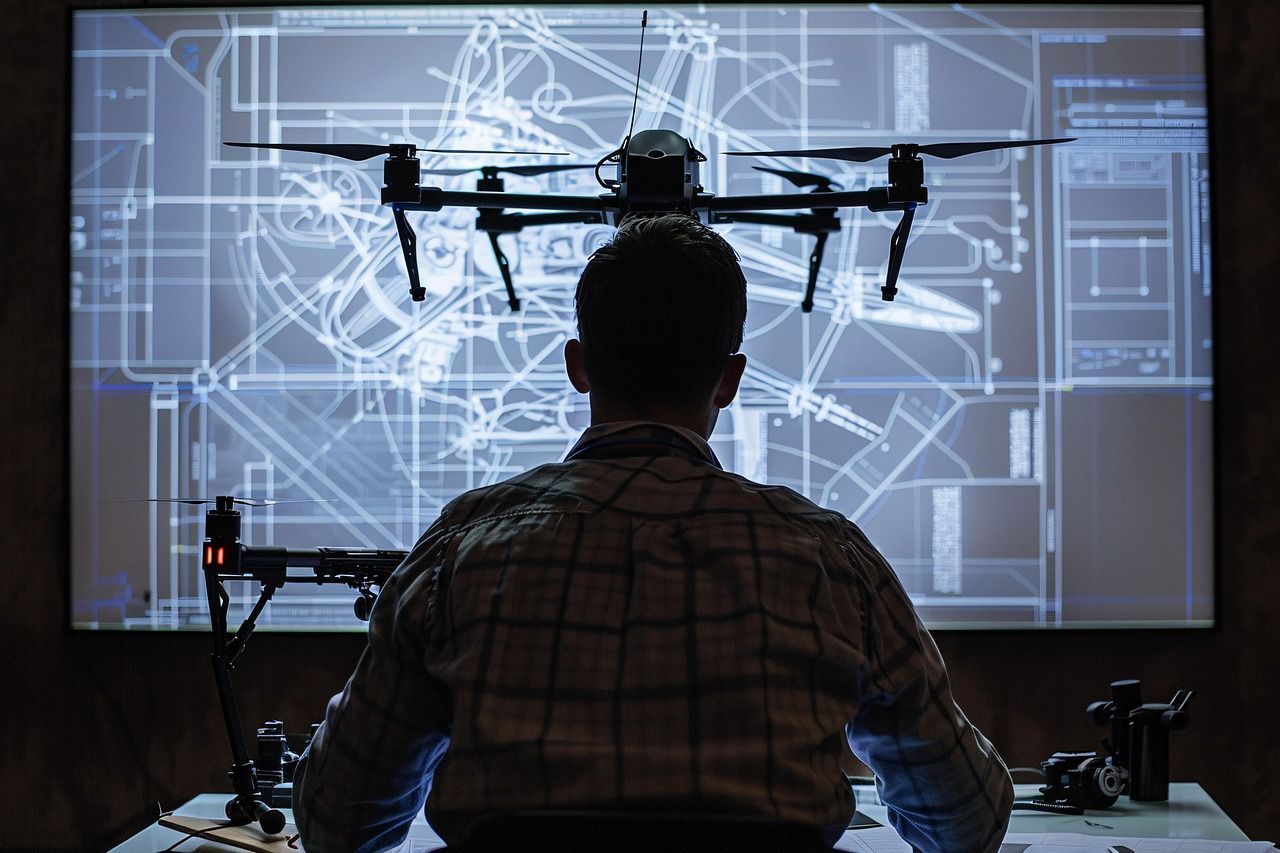
Time is often the deciding factor in business operations, and drones drastically reduce the time required for data collection.
Surveying & Mapping: In construction, mining, or agriculture, drones can scan vast areas in hours, creating centimetre-level accurate maps. This eliminates days, weeks, or months of manual surveying.
Rapid Inspections: Instead of physically climbing towers or scaffolding, inspectors can deploy drones to capture the same (or better) information within minutes.
Efficient Deliveries: Rwanda and Ghana have proven how drones can deliver medical supplies in minutes, bypassing traffic and poor road networks. The same model is expanding into e-commerce, industrial spare parts delivery, and emergency logistics.
How Drones Make Work Safer

Beyond speed, drones remove people from high-risk environments, reducing accidents and insurance costs.
Remote Hazard Inspections: Whether it’s a damaged bridge, unstable building, or hazardous chemical site, drones can inspect without putting human lives at risk.
Disaster Risk Management: Before rescue teams enter flood zones, earthquake sites, or fire-affected areas, drones can assess the safest approach routes.
Regulatory Compliance: Drones can create verifiable, time-stamped evidence of safety inspections and compliance, supporting audits and certifications.
How Drones Help Teams Work Smarter

Drone data’s biggest value lies in its ability to feed advanced analytics and predictive tools.
Data-Driven Insights: Integrating drone data with AI or GIS (Geographic Information Systems) enables the identification of patterns, detection of inefficiencies, and forecasting of trends.
Predictive Maintenance: Regular drone inspections of power lines, wind turbines, or manufacturing equipment help detect early signs of wear, reducing costly breakdowns.
Strategic Planning: Multi-year drone data archives can reveal land use changes, environmental shifts, or infrastructure degradation, guiding investment and policy decisions.
Why African Businesses Should Act Now

The window of opportunity is open, and early adopters will enjoy a competitive edge because of these factors:
Terrain Advantages: In regions where poor infrastructure hinders operations, drones offer a direct line to critical data, eliminating the need for reliance on roads or physical access.
Investor Confidence: Using drone technology signals innovation, efficiency, and scalability qualities that attract partners and funding.
Local Expertise: More certified drone service providers, such as UAVOps, are available, reducing the need to invest in in-house drone programs.
Getting Started with Drone Data in Your Business

Transitioning into drone-powered intelligence doesn’t require a massive investment upfront. Here’s a phased approach:
Identify Operational Gaps: Pinpoint processes where time, safety, or data quality are currently bottlenecks.
Engage Licensed Professionals: Collaborate with certified drone service providers who are familiar with the African regulatory environment.
Pilot Small Projects: Test drone applications in one department or location before scaling.
Integrate with Decision Systems: Ensure that the collected data flows seamlessly into your existing analytics and planning processes.
Upskill Your Team: Train staff to interpret drone-generated insights or partner with analysts for maximum value.
Real-World Examples in Africa
Agriculture: Farmers in Kenya utilise drones equipped with multispectral sensors to detect early-stage crop diseases, resulting in a reduction of up to 30% in pesticide costs.a
Construction: South African construction firms utilise drones to monitor project progress, reducing site inspection time by 70%. b
Energy: Nigerian energy companies deploy drones for thermal inspections of power lines, cutting downtime from weeks to hours.c
Logistics: Rwanda’s medical delivery drones serve over 13 million people, proving large-scale operational efficiency. d
Conclusion
Drone data is more than a technological upgrade; it is a strategic business advantage. For African businesses, the ability to work faster, safer, and smarter has a direct impact on profitability and resilience in a competitive market.
Those who adopt drone-powered intelligence now will not only improve current operations but also future-proof their business for the digital economy.
Whether it’s surveying farmland, inspecting infrastructure, or delivering critical supplies, drones are reshaping how Africa works. The question is no longer if African businesses should use drone data; it’s how quickly they can integrate it into their strategy.
Sources
https://www.ruralhack.org/en/kenya-drones-farming-innovation-equity/
https://eagledrone-service.co.za/facilities-construction-inspections/
https://news.eonenergy.com/news/how-drones-are-helping-secure-power-grids
https://www.theguardian.com/global-development/2018/jan/02/rwanda-scheme-saving-blood-drone